Porto in the Rain
- chirp54
- Feb 17
- 4 min read
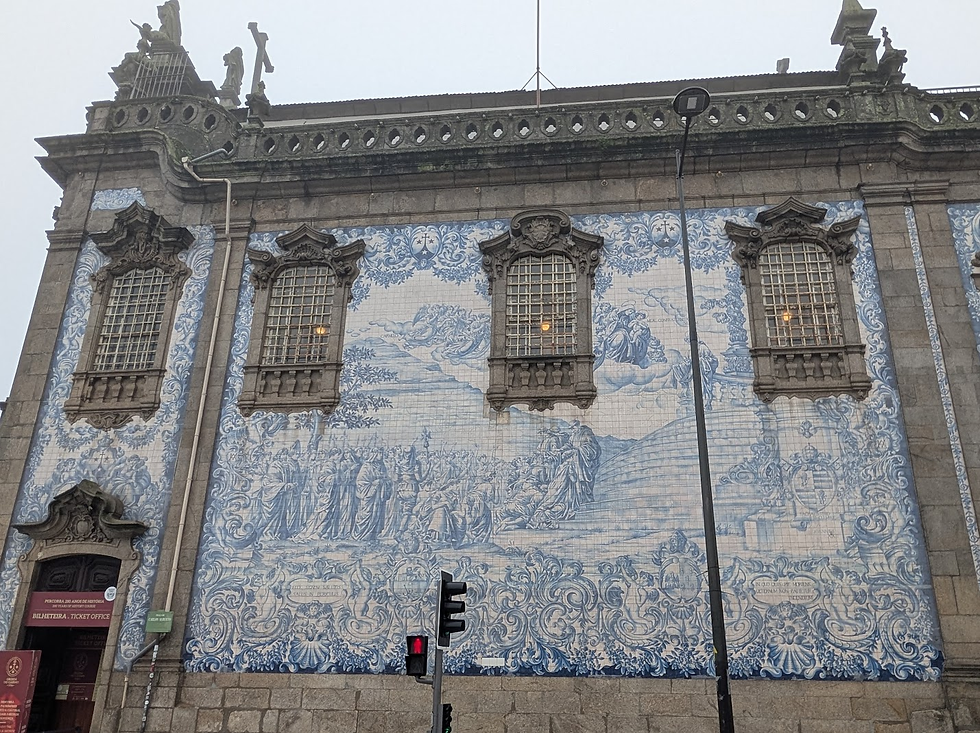
We came to Porto on the recommendation of friends who visited in September. We chose February because it's off season, not so crowded, and generally pretty nice weather with temperatures in the 50s and 60s. It just so happened that we came in the middle of a stormy period. Just like in Devon, many roads are flooded and the high winds and rain make it pretty miserable but we were determined to get out and see as much as we could. In Porto, that generally means churches and tiles. Tiles have a long history in Porto (and Portugal in general) and reflect influences of Moorish and Dutch tile making. The 18th century marked the "Golden Age," featuring large, detailed, narrative panels on churches.

The whole city seems to be under construction. Cranes are everywhere, the streets are torn up, and detours are ubiquitous. It took a few detours to get to the São Bento train station

but once inside, it was well worth the trouble. The station was designed in the French Beaux-Arts style by the architect José Marques da Silva. São Bento station took its name from a Benedictine monastery that burned down on this spot in 1783. The station has acquired fame from the 20,000 azulejos tiles that adorn the atrium walls. The tiles depict landscapes and ethnographic scenes as well as historical events like the Battle of Valdevez.


The azulejos tiles were laid down over 11 years between 1905 and 1916 by artist Jorge Colaço. Not all the tiles are blue and white. Running along the top of each wall is a color frieze that illustrates the history of transport.


A long walk uphill brought us to Igreja do Carmo aka the Carmo and Carmalitas Church.

Its opulence is quite staggering.

Most of the churches in Porto charge an entry fee, as did this one. Several other churches have signs saying that pictures are not allowed because these are places of worship, not tourist attractions. Few tourists obey.
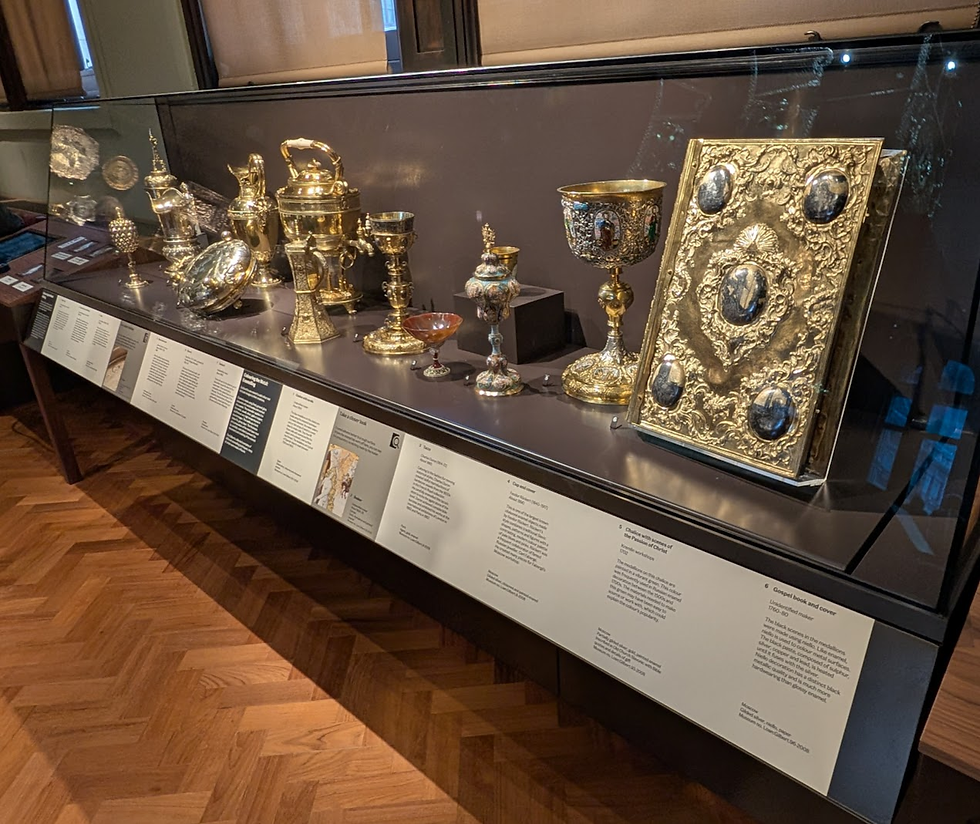
The tour of Carmo includes a look at the treasury,

and a little room that had a cross made from the bones of six saints (which is, in my book, more than a little creepy).

It also held the body of Sister Maria de Jesus (totally creepy in anybody's book!)

Then it's up a tiled stairway

to a hallway with openings which look down into the church. These were places for the wealthy to observe the service without having to sit amongst the poorer parishioners. They offer wonderful views of the alter.


There is one hallway which is filled with a collection of crucifixes, but it was disappointing that there was no note of their age or provenance anywhere.

A little QR code at the end of the hall leads to a page that tells you to go upstairs to the Dispatch House. Presumably, this is a dining room once used for the priests.

The walls feature lovely tile work and paintings which, again, are not labeled.

The vestments room contained two coaching chairs and a collection of vestments that went back centuries. Interestingly, the history of these was noted in detail.

This robe dates to the 18th century and is still in remarkable condition.

Descending a set of stairs

one reaches a small room which features a portrait of Manuel II, the last King of Portugal, who was overthrown in the Republican Revolution of 1910, alongside that of his mother. Bruce opined that she looks like a drag queen. How rude.

The hall led to the library.

The last stop before you exit is, of course, the gift shop. Since we needed neither a new rosary nor a book about the saints, we skipped it.

The side of the church is tiled in blue and white tiles designed by Silvestro Silvestri.

There's a fascinating little quirk about the Church of Carmo and Carmalitas. The Carmalitas church (on the left) was part of a convent in the 17th century. Carmo church was built in the 18th century. A three foot wide building separates the two churches. Called the Hidden House or Casa Escodida, the house was built due to legal regulations that prohibited the two churches from sharing a wall. Wags say that it was built to prevent the nuns and the priests from "making contact."

We left the church and passed the University of Porto with its fabulous fountain

and walked down lots of narrow streets typical of Porto.


We meandered down to the Douro riverside where a busker was playing drums along with a pre-recorded track of Abba songs. Abba?

Due to the windy, rainy weather, the water taxis to the other bank were not operating and none of the little tour boats were sailing either.

We walked up about three million steps to get back to our flat. Okay, maybe fewer than that, but it felt like three million.


That evening we went to Time Out Market, a market refurbished in 2024 by the publishers of Time Out Magazine. Not surprisingly, it turned out to be a little jive.

It was basically a long hallway filled with tiny restaurants: sushi, pizza, seafood, tacos and one Portuguese restaurant that wasn't very good.

Definitely not recommended for an authentic Porto experience.


Comments